Last year around this time, Disney’s live-action Lilo & Stitch was about to arrive, and fans wondered if the studio would be able to bounce back from its live-action Snow White stumble and resume its streak of hit remakes. And… yep, no problem there. So the live-action Moana will be diving into much safer waters when it arrives July 10, even if this latest trailer suggests it’s basically a shot-for-shot remake of the original film. That includes Dwayne Johnson as Maui, complete with animated tattoos.
This new live-action take on Moana stars Catherine Lagaʻaia as Moana alongside Johnson, who also voiced Maui in the animated films.
Disney also shared a new featurette, “Artistry of Moana,” offering a behind-the-scenes peek at the film with director Thomas Kail as well as Laga’aia, Johnson, and the film’s costume designer and choreographer.
The rest of the cast includes John Tui as Moana’s father, Chief Tui; Frankie Adams as Moana’s mother, Sina; and Rena Owen as Moana’s Gramma Tala. Auli’i Cravalho, the voice of Moana in the animated films, is among Moana‘s executive producers. The film features original songs by Lin-Manuel Miranda, Opetaia Foaʻi, and Mark Mancina, and an original score composed by Mancina.
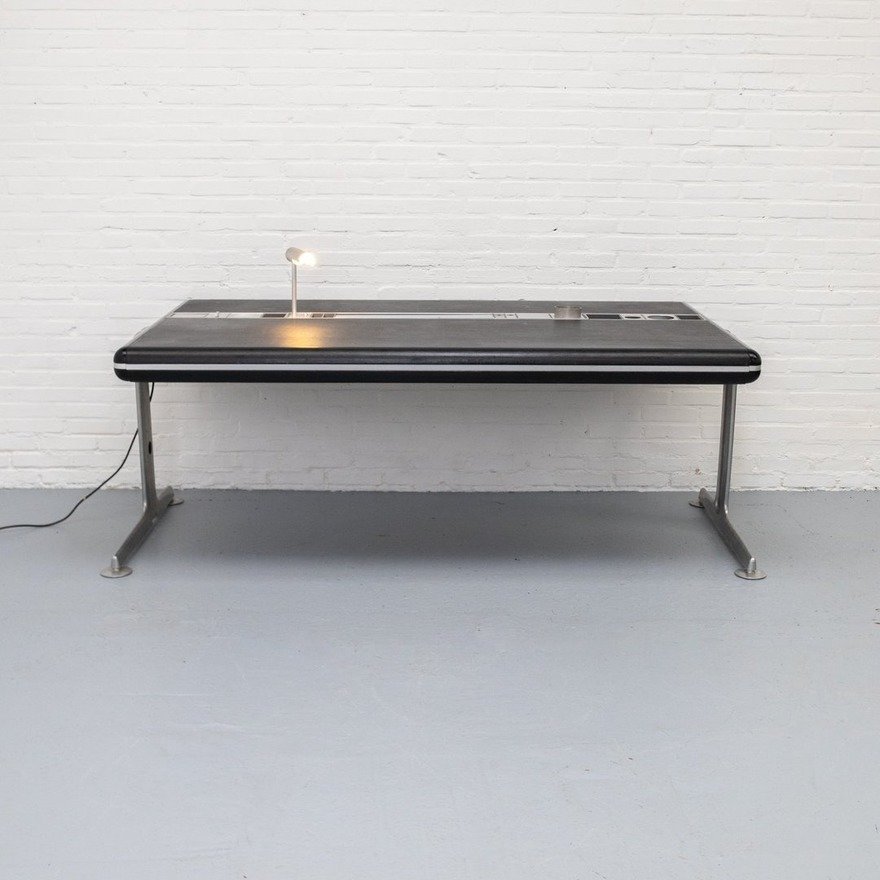
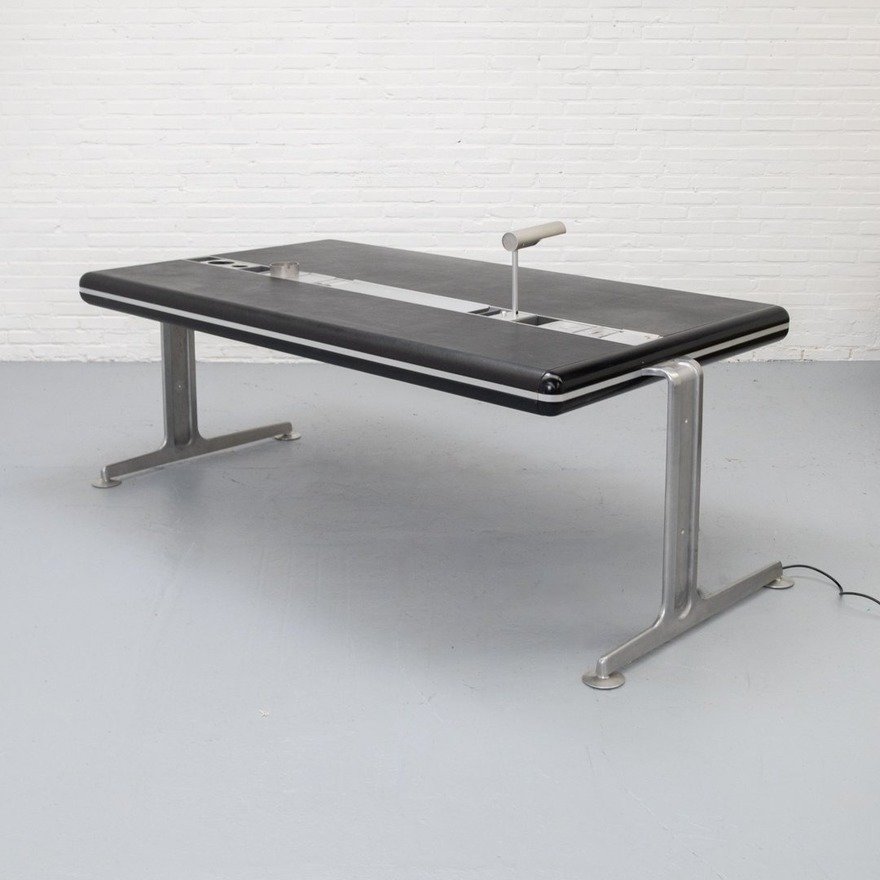
Though this was designed in the 1970s, this desk looks closer to modern-day furniture than say, a desk from the 1950s.
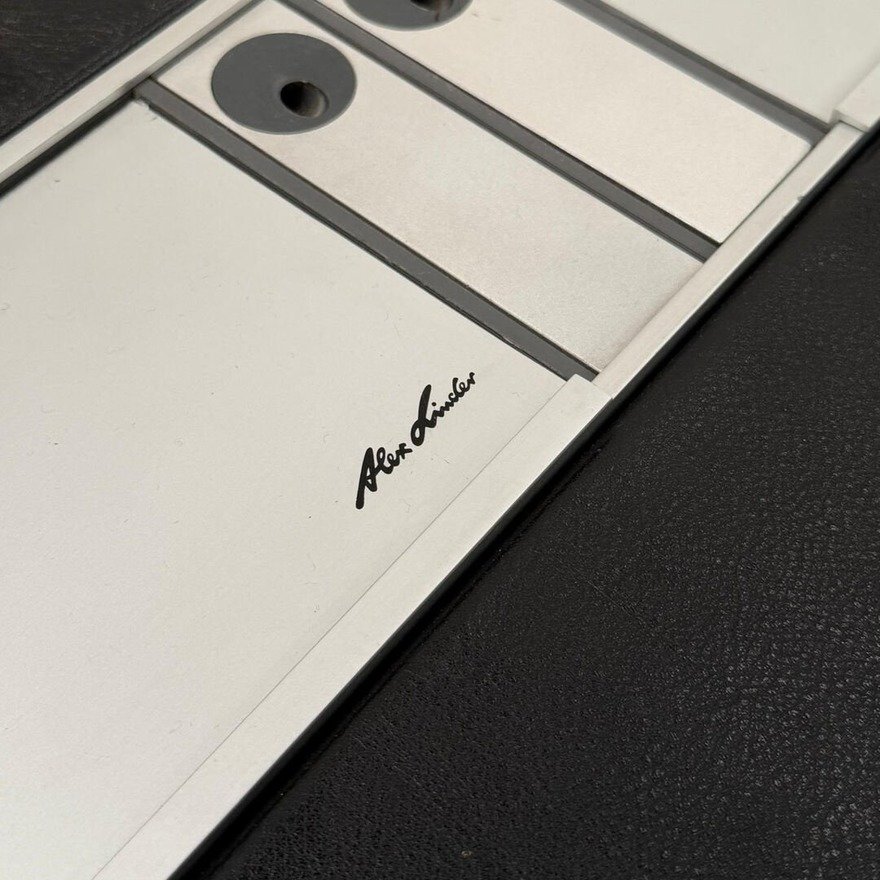
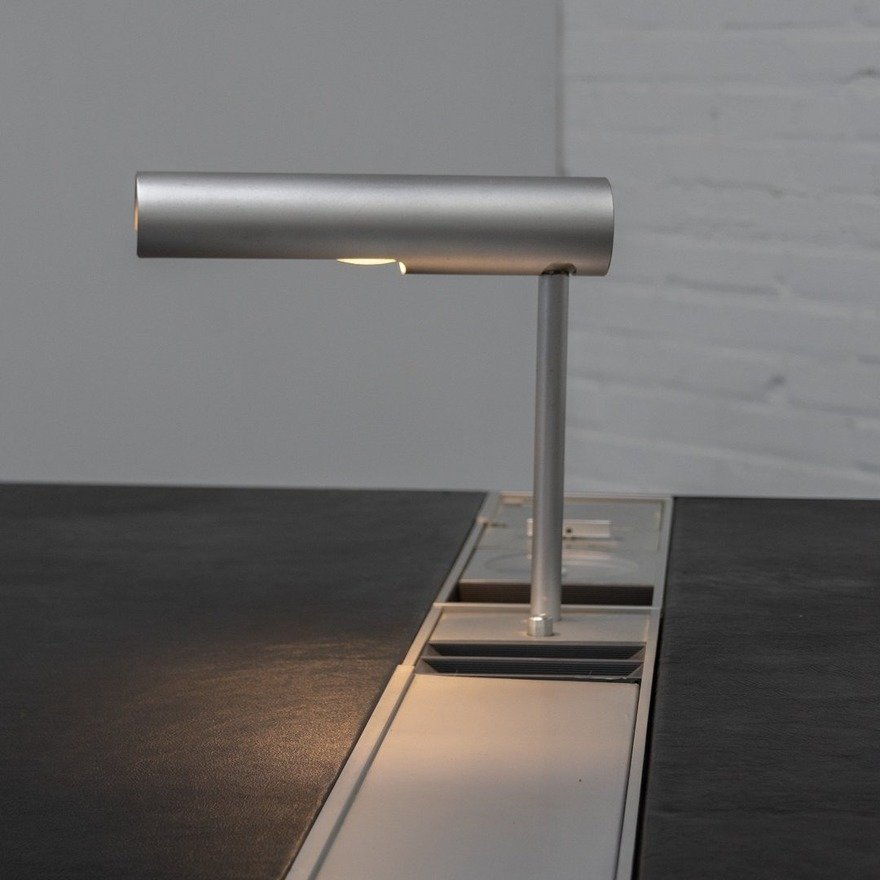
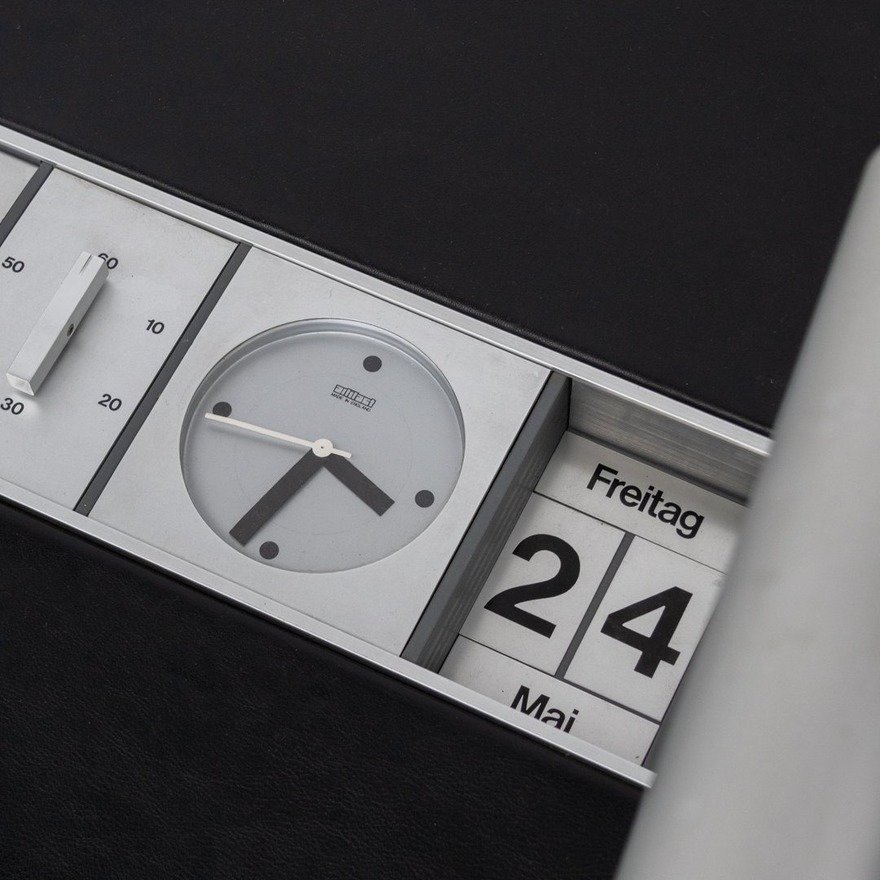
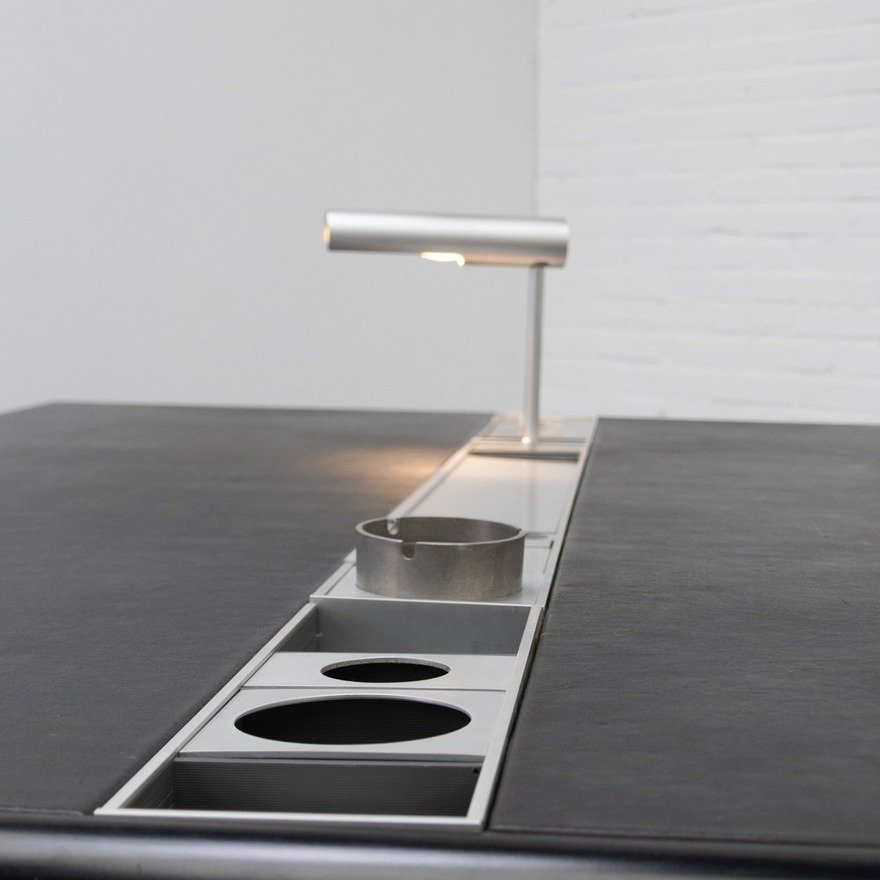
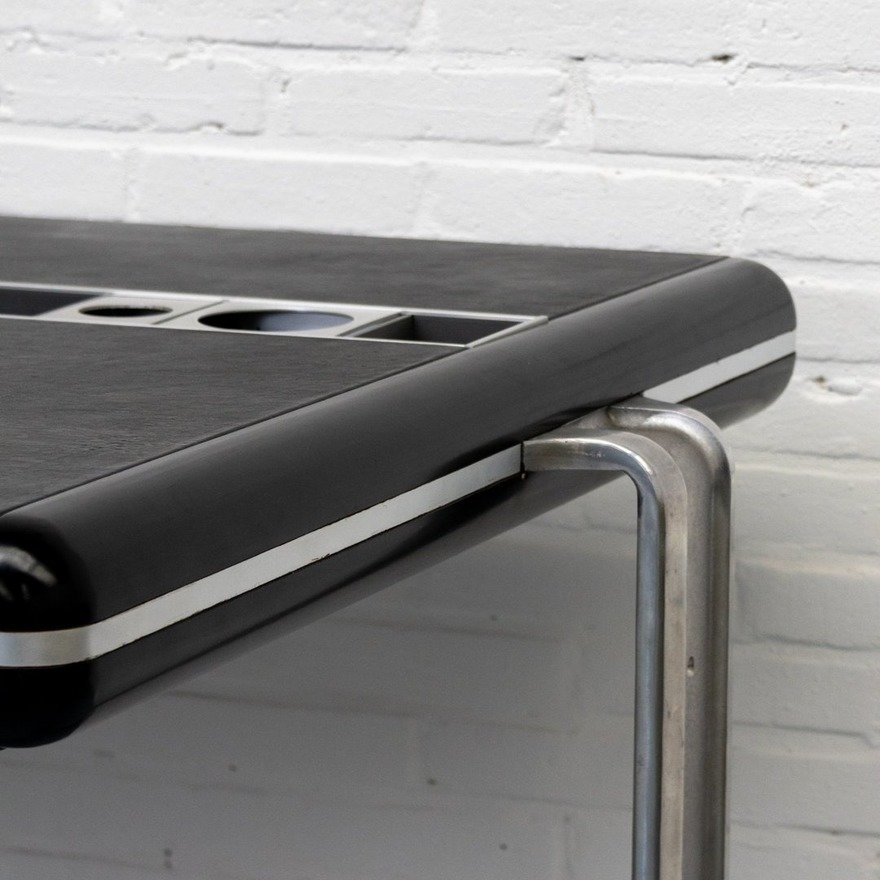
Danish designer Alex Linder’s Executive Desk has no drawers, and features a recessed aluminum rail that takes a variety of accessories: A desk lamp, a clock, a calendar, a countdown timer (presumably for meetings), little storage bins and, this being the ’70s, an ashtray.
The user chooses where to place the accessories within the rail.
The desk surface is leather, an unusual choice both now and then.
If this thing was height-adjustable and had appeared on a current-day Kickstarter, I wouldn’t bat an eye.
Bambu Lab makes the most popular 3D printers in the world, earning a reputation for ease of use, reliability, and great value. But not everyone is in love with the company’s walled garden approach, which involves locking out third-party slicers and a heavy dependence on the cloud.
You push your Laravel project to production. Everything works fine for weeks. Then suddenly, performance slows down, queries start lagging and debugging turns into a detective job.
After hours of digging, you discover the real issues:
A foreign key column without an index
A table with 35 columns
Prices stored as integers
A VARCHAR (255) column that never needed to be that wide
Tables missing timestamps
None of these are dramatic bugs. But together, they quietly damage database performance, maintainability and scalability.
That’s exactly the kind of problem DBStan was built to solve.
Instead of discovering database issues months later, DBStan analyzes your schema in minutes and flags structural, performance and architectural problems before they become production incidents.
What Is DBStan?
DBStan is a Laravel database schema analyzer that performs a comprehensive read-only inspection of your MySQL database structure. It detects design issues, missing indexes, performance risks and schema inconsistencies automatically.
The package is developed by IT Path Solutions and designed for Laravel developers, database administrators and DevOps teams who want better visibility into their database structure.
Think of it like PHPStan for your database schema.
Instead of analyzing PHP code, it analyzes how your database tables, indexes and relationships are structured.
The tool runs a full Laravel database architecture analysis. It produces a categorized report to help developers improve schema quality.
Technical Requirements
Component
Requirement
PHP
^8.1 | ^8.2 | ^8.3 | ^8.4
Laravel
^9.0 | ^10.0 | ^11.0 | ^12.0
Database
MySQL
Package Manager
Composer
Frontend Dashboard
Bootstrap 5.3.2 (CDN), Bootstrap Icons
License
MIT
These requirements allow DBStan to work across modern Laravel projects without additional dependencies.
The Real Problem
Common Database Mistakes Developers Make
Even experienced developers unintentionally introduce database design issues during development.
Laravel migrations make database creation easy, but that convenience sometimes hides structural problems.
Here are a few common mistakes DBStan catches automatically.
Missing Indexes on Foreign Keys
A column like user_id without an index might work fine initially. But once your application grows, query performance starts to degrade.
Prices Stored as INT Instead of DECIMAL
Storing monetary values as integers often causes rounding problems and inconsistent calculations.
Tables Without Timestamps
Laravel relies heavily on created_at and updated_at. Missing timestamps reduces traceability and data tracking.
Overusing VARCHAR (255)
Many developers default to VARCHAR (255) for almost everything. In reality, most fields don’t need that much space.
Weak Foreign Key Rules
Foreign keys without cascading rules can leave orphaned data after deletions.
Missing Soft Deletes
Critical tables without deleted_at make recovery impossible. Accidentally removed data cannot be restored.
These kinds of schema design issues accumulate quietly over time.
A Laravel database analysis tool like DBStan scans your entire schema and surfaces these risks instantly.
How DBStan works Internally
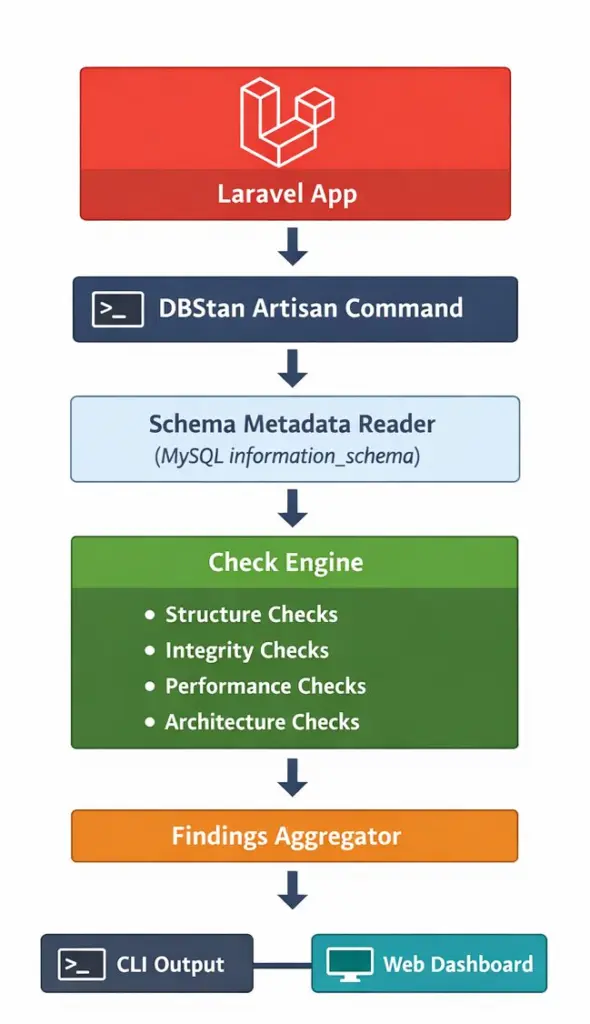
DBStan performs a read-only inspection of the database by querying MySQL metadata tables and Laravel’s database connection layer.
Internally, the analyzer collects schema information using:
information_schema.tables
information_schema.columns
information_schema.statistics
SHOW INDEX
SHOW CREATE TABLE
This metadata is then passed through a set of modular rule checks that analyze:
column types
index coverage
table width
nullable ratios
foreign key relationships
storage size
Each rule produces a Finding object containing:
severity
description
affected table
suggested improvement
These findings are aggregated and displayed in two places:
This rule-based architecture makes DBStan easy to extend with custom checks.
How DBStan Helps
Four Categories of Database Checks
DBStan performs 26 automated checks grouped into four categories.
Instead of presenting raw database metadata, it translates technical issues into clear findings developers can act on.
1.Structure Checks
Is your table design clean?
Structure checks focus on table design, column types and schema conventions.
Examples include:
Check Name
What It Detects
Severity
Too Many Columns
Tables exceeding max_columns (default 25)
WARNING
Wide Varchar Columns
VARCHAR columns wider than 190
WARNING
Missing Timestamps
Tables missing created_at / updated_at
BEST PRACTICE
Missing Soft Deletes
Tables missing deleted_at column
BEST PRACTICE
Nullable Column Overuse
Columns marked nullable without justification
NULLABLE
Large TEXT Columns
Columns using TEXT type
PERF RISK
Data Type Appropriateness
“price” columns stored as INT not DECIMAL
DATA TYPE
Enum Overuse
Tables with >2 ENUM columns or ENUMs with >5 values
ENUM OVERUSE
Boolean Overuse
Tables with >4 boolean columns
ARCH WARNING
Pivot Table Structure
Pivot tables with unnecessary id or timestamps
PIVOT
Repeated Common Fields
Common field names across tables
REPEATED FIELD
Mixed Domain Columns
VARCHAR columns named “data”, “info”, “details”
DOMAIN MIX
These checks help enforce Laravel schema best practices, ensuring tables remain readable and maintainable.
2. Integrity Checks
Is your data safe?
Integrity checks verify relationships, constraints and data consistency.
Examples include:
Check
What It Detects
Severity
Foreign Key Naming
Columns like userid instead of user_id
NAMING
Duplicate Rows Risk
Tables without primary or unique keys
DATA INTEGRITY
Orphan Risk
_id columns without foreign key constraints
ORPHAN / HIGH RISK
Cascading Rules
Foreign keys using restrictive delete rules
INTEGRITY
Unique Constraint Violations
Duplicate values in email or slug columns
UNIQUE VIOLATION
These issues often go unnoticed until real data inconsistencies appear.
A Laravel database schema analyzer like DBStan identifies them early.
3. Performance Checks
Will your database scale?
Performance issues rarely show up during development. They appear when real traffic hits your application.
DBStan includes several checks focused on database performance.
Examples include:
Check
What It Detects
Severity
Missing Foreign Key Indexes
_id columns without indexes
ERROR
Large Table Size
Tables exceeding storage thresholds
SIZE ALERT
High NULL Ratio
Columns filled mostly with NULL values
DATA QUALITY
Status Column Indexing
Unindexed state or status columns
PERF
Log Table Indexing
Log tables missing indexes on created_at or user_id
PERFORMANCE
Unbounded Growth Risk
High-growth tables lacking indexing
GROWTH RISK
These checks form the core of DBStan’s Laravel database performance analysis, helping developers identify scalability risks early.
4. Architecture Checks
Are you designing for the long term?
Beyond structural and performance checks, DBStan also evaluates architectural patterns.
Examples include:
Check
What It Detects
Severity
JSON Column Overuse
Tables with too many JSON columns
WARNING
Audit Trail Check
Missing created_by, deleted_by or updated_by fields
AUDIT
Polymorphic Relation Overuse
Excessive polymorphic relationships
ARCH RISK
These checks help teams evaluate long-term maintainability and overall schema architecture.
Installation and Quick Start
Getting started with DBStan takes less than two minutes.
Step 1 – Install the Package
composer require itpathsolutions/dbstan
Step 2 – Run the Analysis
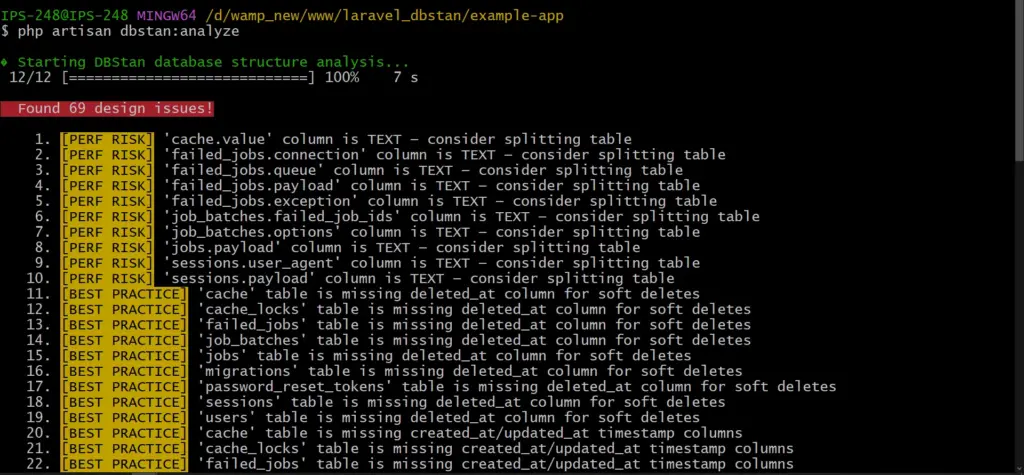
php artisan dbstan:analyze
DBStan scans your entire database schema and runs all enabled checks automatically.
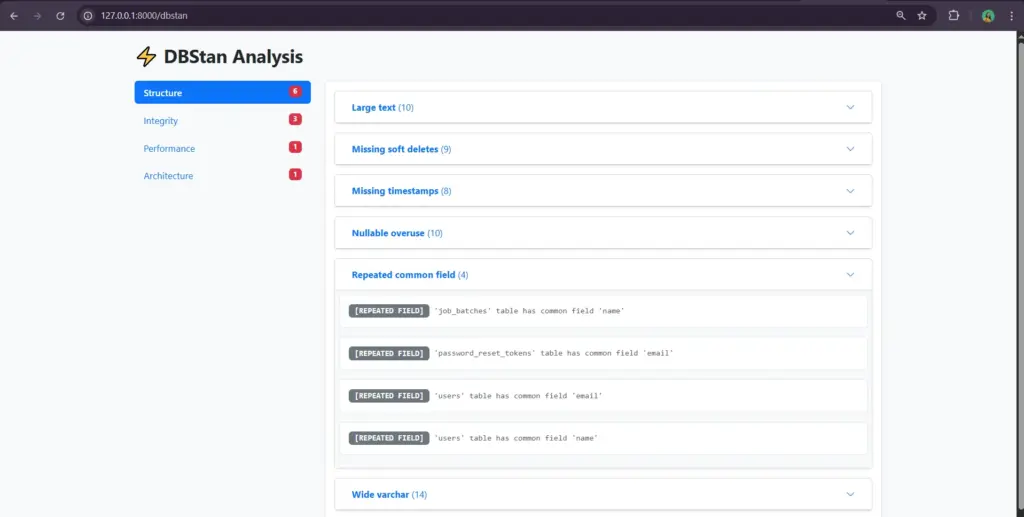
The dashboard provides a visual interface for exploring issues found during analysis.
What the Output looks like
DBStan prints a list of findings grouped by severity. This happens when you run the CLI command.
A typical report might look like this:
⚠️ WARNING – Table `orders` has 32 columns (exceeds limit of 25)
❌ ERROR – Column `user_id` in `posts` has no index
✅ BEST PRACTICE – Table `users` is missing `deleted_at`
All are categorized with a severity level. This helps developers know what to fix first.
Severity types include:
Label
Meaning
Action
ERROR
Critical schema problem
Fix immediately
WARNING
Design concern or anti-pattern
Review and address
BEST PRACTICE
Improvement recommendation
Consider adopting
PERFORMANCE
Potential performance bottleneck
Add index or optimize
HIGH RISK
Data integrity at serious risk
Fix immediately
SIZE ALERT
Table storage exceeds threshold
Archive/partition/optimize
NAMING
Column naming convention violation
Rename column
AUDIT
Missing audit trail columns
Add audit columns
This structured output turns raw schema inspection into actionable insight.
Web Dashboard for Visual Analysis
While the CLI command is useful for quick checks, DBStan also includes a web dashboard.
The dashboard is available only in local or staging environments, keeping production environments secure.
The interface includes:
A left sidebar with category tabs
Issue counts for each category
Collapsible cards showing detailed findings
A summary of schema problems
This makes DBStan useful not only for developers but also for teams reviewing database architecture together.
Securing the Dashboard
Because DBStan exposes schema information, the dashboard is intentionally restricted.
By default:
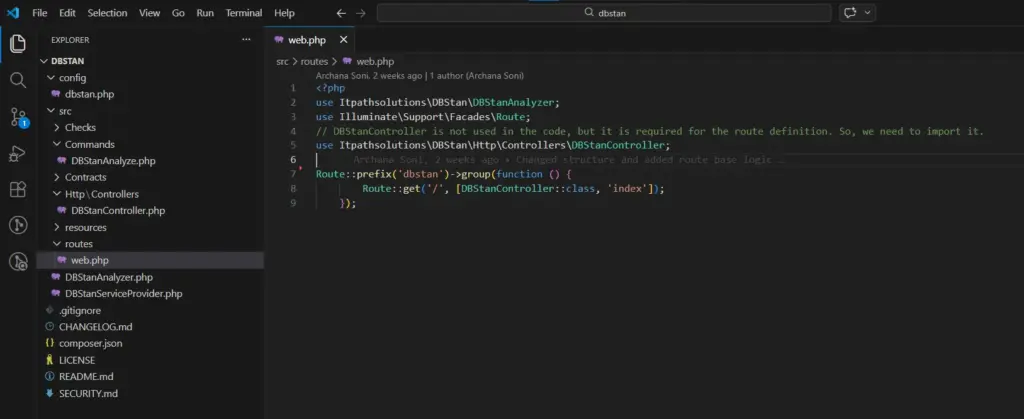
The /dbstan route is disabled in production
It works only in local or staging environments
For staging environments, you can add additional protection such as:
authentication middleware
IP whitelisting
admin-only access
These safeguards prevent schema information from being exposed publicly.
Configurable for your Project
Every Laravel project has different database needs.
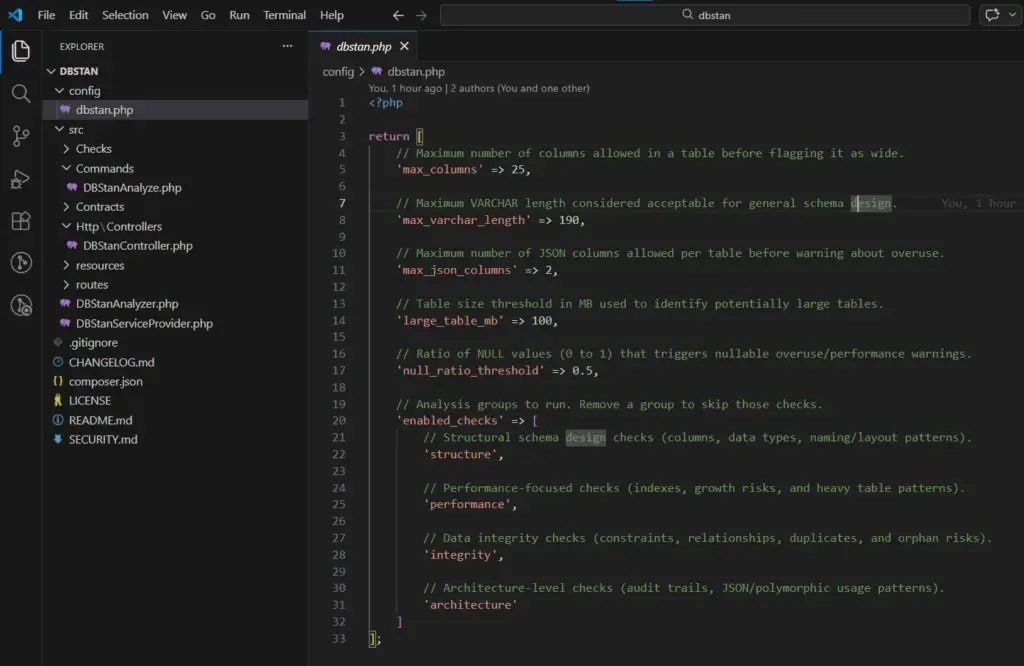
DBStan includes a configuration file that allows developers to customize thresholds and checks.
You can publish the configuration file using:
php artisan vendor:publish –tag=dbstan-config
Configuration options include:
Key
Type
Default
Description
max_columns
int
25
Tables with more columns trigger warning
max_varchar_length
int
190
VARCHAR columns wider trigger warning
max_json_columns
int
2
Tables with more JSON columns trigger warning
large_table_mb
int
100
Tables larger (MB) trigger size alert
null_ratio_threshold
float
0.5
Columns with NULL > ratio trigger warning
enabled_checks
array
all four
Remove a category to skip its checks
This flexibility makes DBStan a practical Laravel database optimization tool that can adapt to different application architectures.
Who should use DBStan?
DBStan is useful for more than just Laravel developers.
Solo Developers
Run it before deployment to catch schema issues early.
Development Teams
Use it during code reviews to enforce database standards.
DevOps Engineers
Integrate it into CI pipelines as part of automated quality checks.
Database Administrators
Audit existing Laravel databases for structural problems.
Open-Source Maintainers
Ensure consistent database architecture across contributors.
What DBStan does NOT do
To keep the tool safe and predictable, DBStan intentionally avoids certain actions.
It:
does not modify your database
supports MySQL only
keeps the web dashboard disabled in production
does not auto-fix issues
Instead, it focuses on reporting and analysis so developers remain in full control.
What’s Beneath the Code?
Your application logic can change. Your UI can evolve.
But your database schema becomes the foundation everything depends on.
Once bad design decisions enter production, fixing them becomes expensive.
DBStan helps teams run a quick Laravel database architecture analysis, identify schema problems early and maintain a healthier database structure over time.
If you’re serious about database quality, run your first analysis today.
You might be surprised by what your schema reveals.
Your Laravel database deserves the same level of analysis as your code.
Run your first analysis in minutes!
Frequently Asked Questions
Does DBStan modify my database?
No. DBStan is completely read-only. It only reads schema metadata and row counts from your database to analyze structure, relationships and indexes. It never inserts, updates or deletes any data.
Is DBStan safe to run in production?
Yes. The Artisan command can safely run in any environment, including production.
However, it’s recommended to avoid running it during peak traffic because some checks query information_schema and table statistics, which may add minor overhead.
Also, the web dashboard is automatically disabled in production to prevent exposing database structure publicly.
Which databases are supported?
At the moment, DBStan supports MySQL only.
The analyzer relies on MySQL-specific commands such as:
SHOW TABLES
SHOW COLUMNS
SHOW INDEX
information_schema
Support for other databases may come in future versions.
Can I create my own custom checks?
Yes. DBStan is designed to be extendable.
You can create custom checks by adding a class inside the src/Checks/ directory and:
Extending BaseCheck
Implementing the required methods: a. run() b. name() c. category()
DBStan automatically discovers new check classes, so you don’t need to manually register them.
Can specific checks or categories be disabled?
Yes. DBStan allows you to control which checks run.
Open the configuration file:
config/dbstan.php
Inside the enabled_checks array, you can include only the categories you want to run. You might choose structure or performance or integrity or architecture.
This makes it easy to tailor the analysis according to the needs your project.
Why am I seeing issues on Laravel’s default tables?
DBStan scans every table in the database, including Laravel’s default tables like jobs, failed_jobs or password_resets.
Some checks may flag these tables for things like: missing timestamps, missing soft deletes, column structure warnings.
These warnings are meant for information. Use your own judgment before acting on them.
The /dbstan dashboard is not loading. What should I check?
If the dashboard route is not loading, check the following:
Make sure your .env file has APP_ENV=local or APP_ENV=staging
Confirm the package is installed composer show itpathsolutions/dbstan Once these are verified, the dashboard should load at: http://localhost:8000/dbstan